
Execution
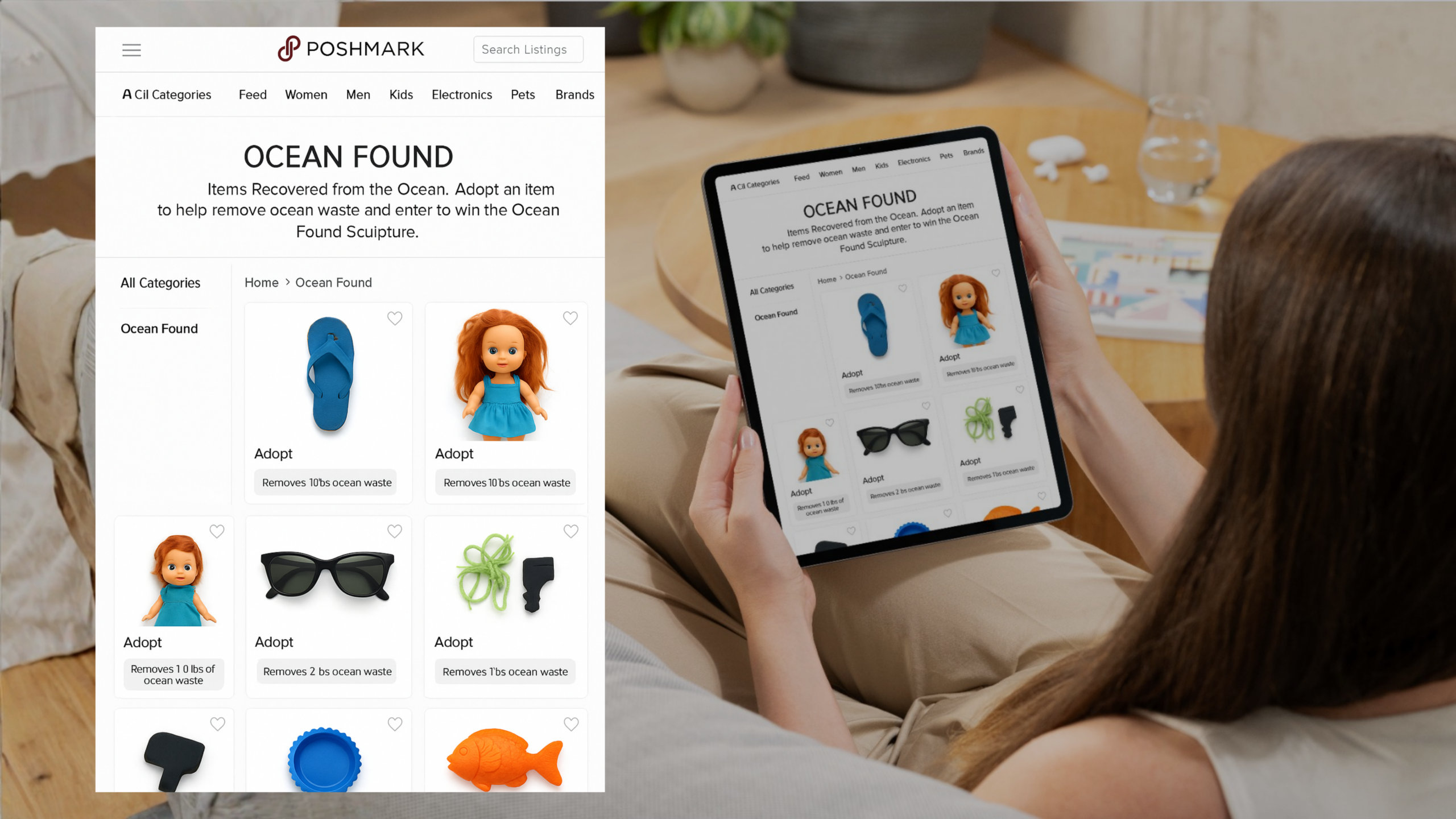
A dedicated “Ocean Found” section lives inside the Poshmark marketplace. Items are listed with editorial-quality photography, GPS coordinates of where they were recovered, and a short narrative giving each object a story.
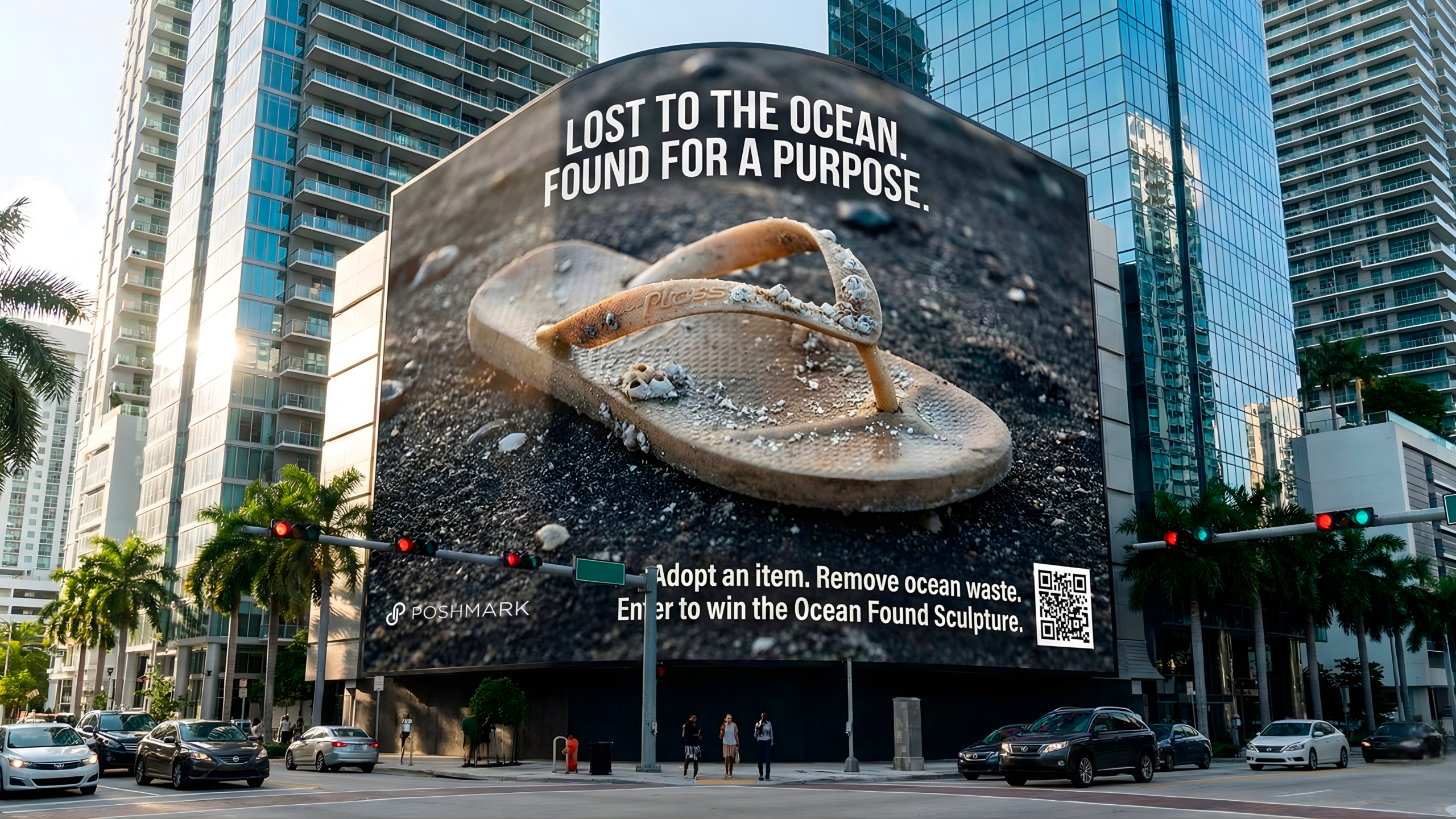
Large-format billboards in Miami feature individual ocean-found objects shot as beautiful, high-end still lifes.
Poshmark’s feed and reels document the full journey: cleanup crews recovering items on shore, editorial photoshoots of found objects, and artist Aurora Robson building the sculpture in her studio.
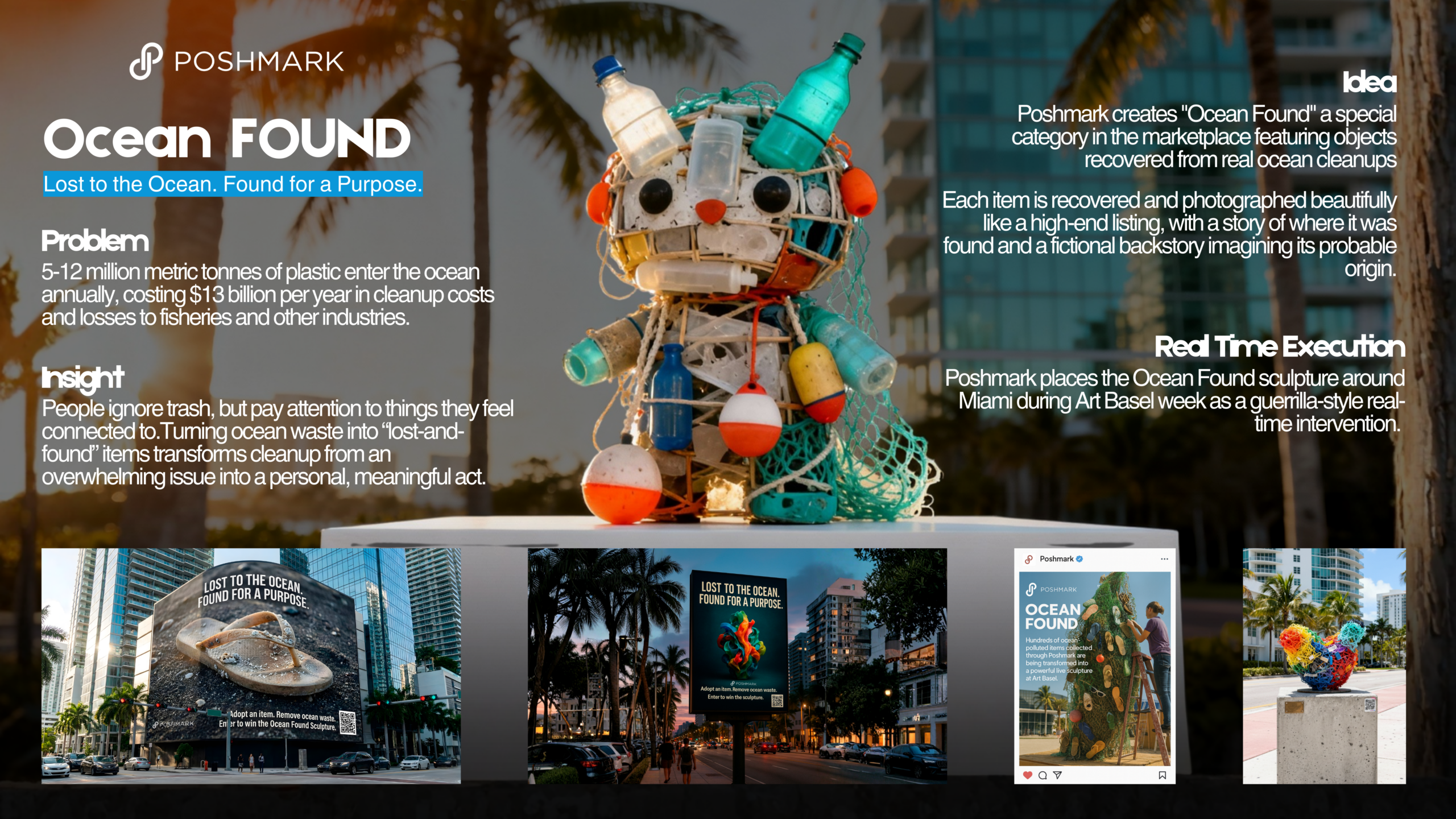
A surprise takeover during Art Basel Miami places the Ocean Found sculpture, assembled entirely from clean-up collected items, at the center of the city with no advance announcement. A small, museum-style plaque includes a QR code that links to the adoption page, leveraging Miami’s most important art week.
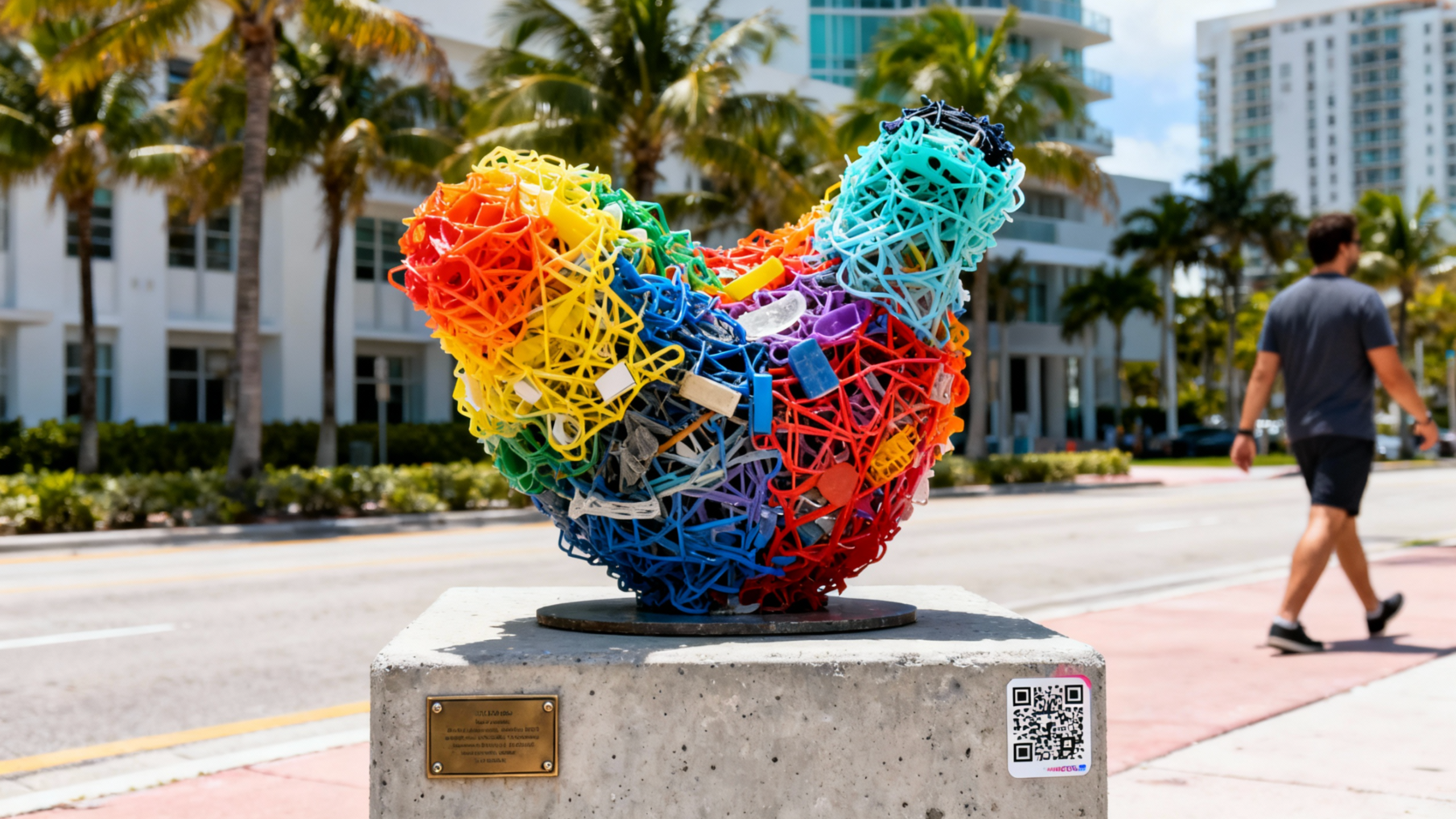
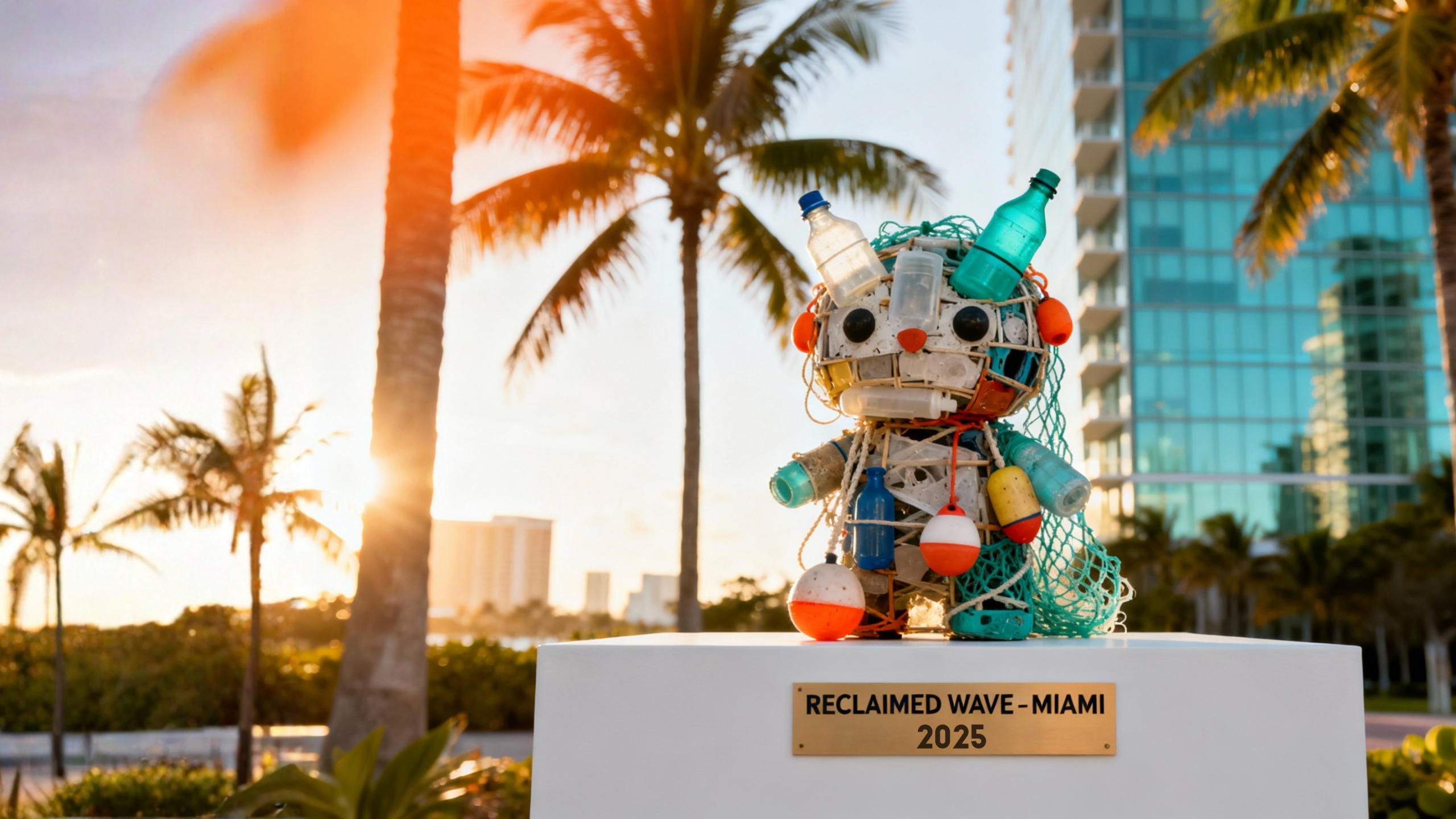
The campaign turned ocean cleanup into a cultural moment.
Results
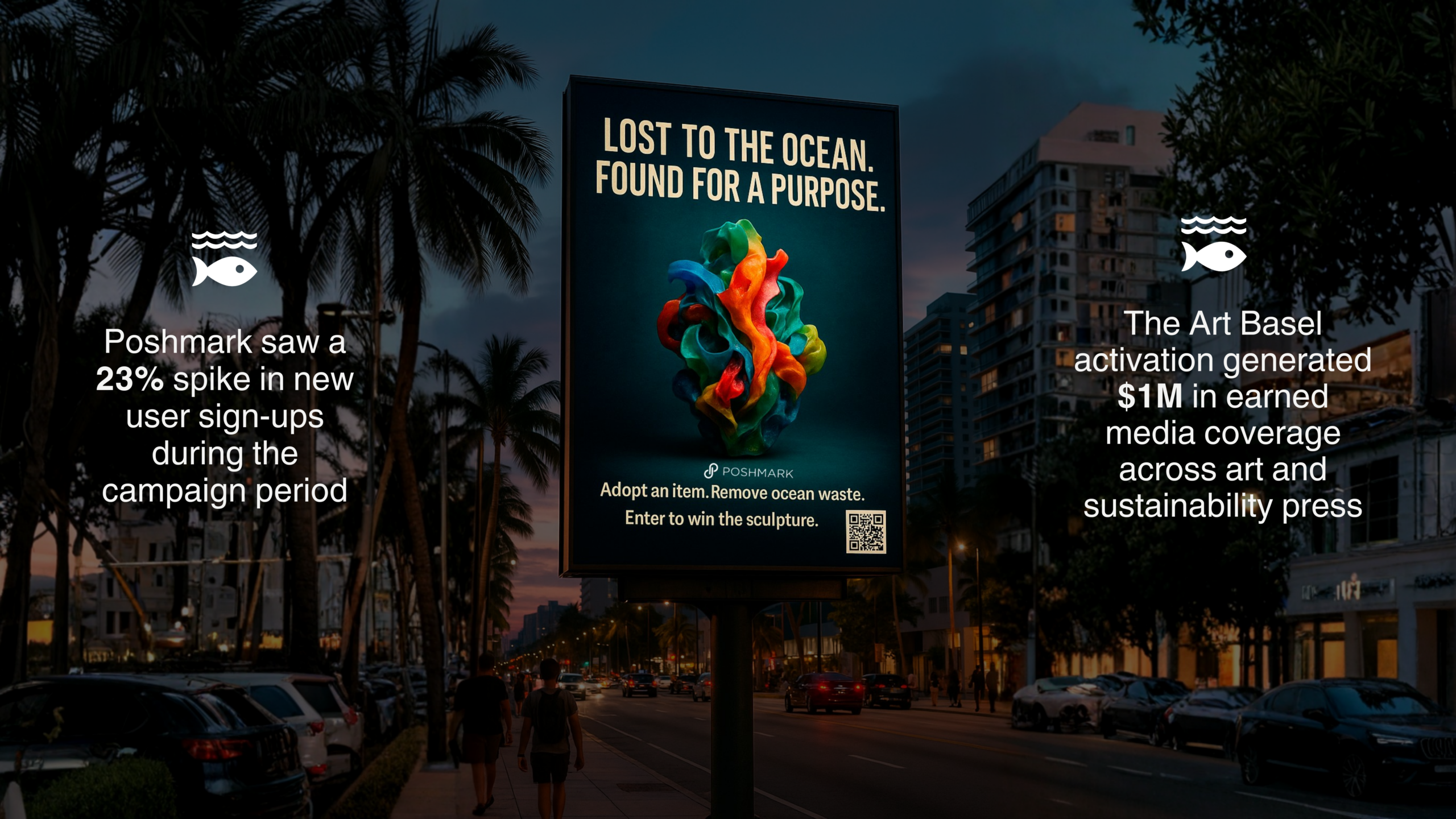
By reframing trash as something worth caring about, Ocean Found proved that the right emotional hook can turn environmental apathy into action at scale.
Miami Ad School
Strategists: Luka Nonato and Ceshya Sanches
Art Directors: Luka Nonato and Ceshya Sanches
AI-Generated Content: Sora, Gemini and Perplecity AI